When words fail, music speaks <3

Category: Weekly Reflections (Page 1 of 2)

This is the category to apply to your weekly reflection posts from the course.

Week 11 Reflection- Choose your own Adventure

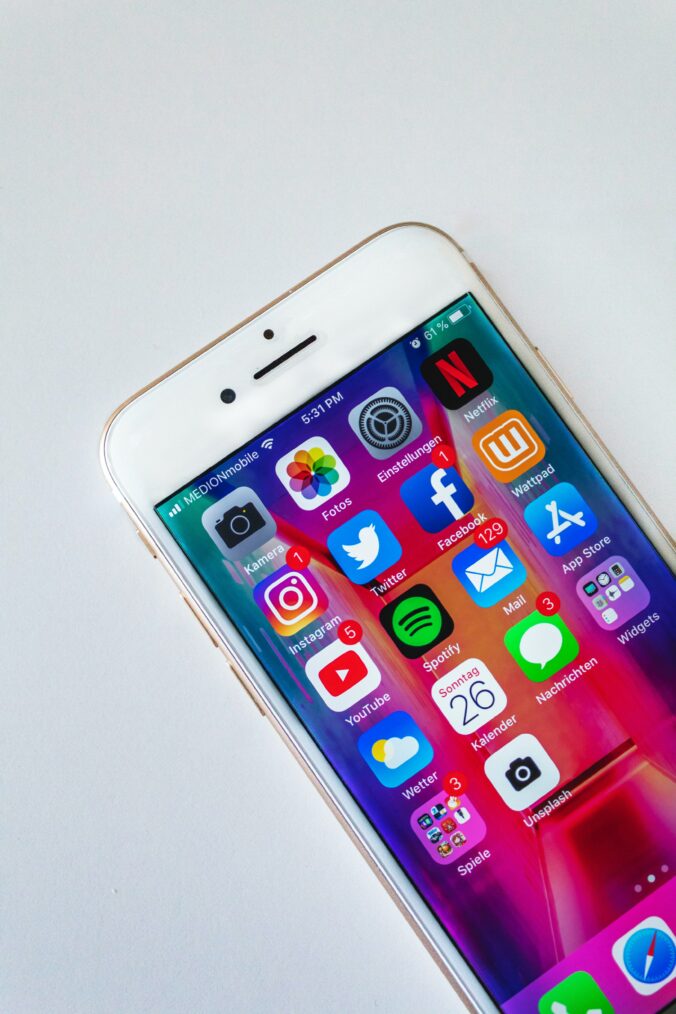
This week in EDCI 336, we had the chance to chose something that interested us, and explore it. I chose to explore the app, Audacity. This is something that I was not familiar with prior to this experience. As a child, I was always the type to make cringe videos and edit them. In high school, I told part in Media Arts classes, and Film and Television classes in which had a large focus on editing. Up to this point I have used various editing tools but my favourites are GarageBand for audio, and IMovie and Final Cut Pro for audio/video mix. For those of you who are not familiar with Final Cut Pro, it is very similar to IMovie but has a bunch more “paid” features that can take your videos to the next level. Unfortunately, I do not have access to this program anymore, so I use IMovie (which still works amazing by the way).

At first, Audacity seemed very confusing to me! The set-up was very different than other apps that I was used to. So, I went searching for a tutorial.

After watching this video it was much easier to understand the app. I proceeded to go and create my own “Marine Land” advertisement song. Although I will not be playing this for you because it is very embarrassing, I was able to edit the pitch, playback speed, and equalize and normalize the sound. It still does not sound amazing, and I definitely have some editing to still do, but it is a start!

I really like the specific tools like noise removal, and equalization. These are really helpful tools that I do not have access to on the editing apps I use at the moment. However, there are A LOT of features on the app, and it can be confusing for a beginner, like myself. Overall, it is fairly similar to FinalCut Pro, but it is free! I think with a bit more playing around, and practice, this app could definitely be a helpful tool for me to use both in the classroom, and in my personal life.

Featured Image by Cedrik Wesche on Unsplash

Week 10 Reflection: Gamification and Game-based Learning

Today, we had a guest presenter come and talk to us about Gamification and Game-based learning. This is something that I look back on from my elementary, middle, and high school years, as a positive experience. I remember having extremely fond memories from going to the computer lab in elementary school. I remember engaging with in a wide-variety of typing games (All the Right Type, Dance Mat Typing, Tux Typing), Incredibox, Club Penguin, Early Learning House Game (Millie’s Math House, etc), Poptropica, Math Playground, Prodigy, and many others that I cannot remember the name of! I welcome any memories of computer games from elementary school in the comments. Looking to dwell in the nostalgia:) For me, I think that typing is such a crucial skill for students to learn at an early age. This was something that I learned in Elementary school and has been super helpful to me in school. It has been awhile since I have been in an elementary school classroom, so I am unsure if typing is still emphasized as highly as it was when I was in school. I hope it is!

I think Tina’s presentation was really interesting. Although her scenario is specific to high school education, I still think there are many things I can take away from it. Specifically, her organization and personalized learning on Google Classroom. Throughout my middle and high school years, I had a lot of experiences with Google Classroom, and can say that this may have been the best I have ever seen. I am also grateful for all the technological resources that Tina introduced us to. Almost all of these resources were new to me, and something I hopefully have the opportunity to explore in the future.

When browsing games on Hour of Code with Amanda, we chose to play AI for Oceans. We chose this game because it looked both simple and fun. We are both hoping to have the opportunity to work with younger students in our practicums, so this game seemed appropriate. This game was not really your typical coding game; rather, it focused on much simpler objectives. Your goal was the program the AI machine so that it cleans the ocean properly. You would then go through and click which things belong/ don’t belong in the ocean. This would basically “code” the machine. https://hourofcode.com/ai-oceans

How do we embed authentically and with care?

This is a topic that we have focused quite a bit on this term. Specifically, our most recent assignment in EDCI 306 is about embedding EDI principles into our classroom practices (due on Friday btw). The five R’s however, were something new to me. In connection to The First People’s Principles of Learning, the 5 R’s, respect, relevance, reciprocality, responsibility, and relationships are greatly emphasized. These 5 words appear to foster a foundation for Indigenous knowledge, culture, and education. As future educators, these words are crucial to reinforce throughout all areas of study. Most importantly, it is crucial to acknowledge the importance of these 5 words when teaching Indigenous Education. Ultimately, the reading provided me with some information and interesting considerations.

Featured Image by Kelly Sikkema on Unsplash

Week 9 Reflection-Jeff Hopkins and PSII

Today, Jeff Hopkins graciously came and presented to us via. Zoom from the Pacific School of Innovation and Inquiry (PSII). To summarize, PSII is basically an independent high school where students have the opportunity to learn what they want to learn. All of the student learning is focused around a central inquiry project” that the students will work on for the year. Through this project they will engage with specific learning competencies and a variety of subject areas like math and language arts. At PSII there are no real “classes” and rather just differentiated spaces around the school where students can learn such as large collaboration spaces, or a quiet space. Ultimately, PSII hopes to put meaning behind student learning.

I thought the concept of PSII was SUPER cool! It was something I had never heard about before, which was surprising considering I have lived in Victoria my whole life. Something that really stood out to me about PSII was the opportunity for personalized student learning. It is evident that students learn best when they are learning about something they are interested in, and Pacific School of Innovation and Inquiry gives students just that. I also appreciated how students were being assessed. There is no real tests or exams, and rather educators would report on personal inquiry progress as well as the learning competencies set out by the school. Therefore, it appears that both formative and summative assessment styles are being used, but just in a different way.

I think the idea of PSII can connect back to the movie we watched at the start of term. Both schools followed a somewhat “alternative” model, and were driven by student interest. Ultimately, I believe that these schools are the way of the future. Even now, we can see schools shifting away from standardized testing and marking, and adopting proficiency scales. This further emphasizes how the curriculum is constantly changing and evolving. However, my only concern is that students will struggle when they transition to the college/university setting. How will they apply and get into university with no marks for each subject? How will they adapt back to a standard model of learning?

Featured Image by Ismail Salad Osman Hajji dirir on Unsplash

Week 8 Reflection- Should a disability define a person?

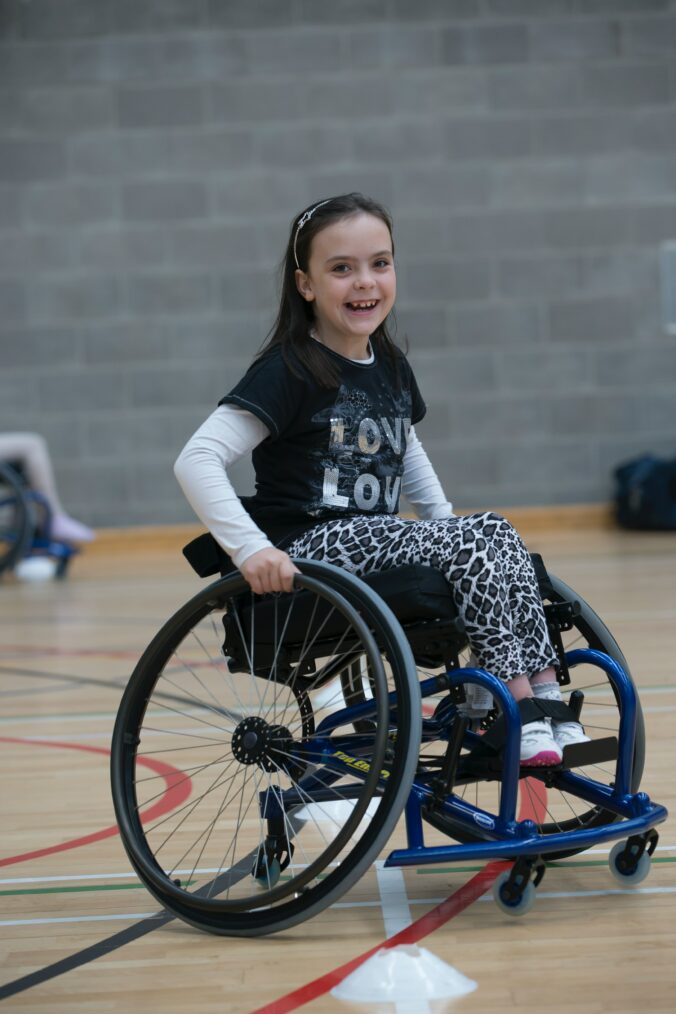
Something that stood out to me from today’s presentation on technology and inclusion by Tracy Humphreys was personal identity and how this relates to individuals with disabilities. We started off our session today with a discussion about our personal identities. At first, I really struggled to come up with ideas for this topic. However, with the help of my peers I started to discover that this was a VERY broad topic, and there are so many emotional and physical traits that make me the person I am today. I connected this idea of personal identity to persons with disabilities. My mom has always emphasized to me that I should not let a disability label a person. For example, rather than saying “an autistic child” you would say “a child with autism.” This concept of personal identity and disabilities peaked my interest and inspired me to explore externally and internally explore further.

After exploring my personal identities, I have chosen to split it into 3 categories: values, interests/talents, personality. 

Values:

  • Relationships 
  • Honesty
  • Respect

Hobbies:

  • Being active
  • Music

Personality (physical and emotional):

  • Female
  • Outgoing
  • Hard-working
  • Anxiety

Personally, I am of mixed minds on whether or not to add anxiety to that list. On one hand, I do feel like it impacts my everyday life, and that I carry with me as a person. I also feel that weaknesses ARE something that define you, and are important to recognize when exploring a personal identity. On the other hand, I really do not like the idea of labeling myself based on this. National Network discusses some of the standards for referring to persons with disabilities. They explain that it is important to emphasize the abilities and strengths of a student rather than their limitations and weaknesses. They also mention that avoiding phrasing like “normal” is important. 

Ultimately, as a future teacher, I think it is important to recognize that many students have varying disabilities, but they also have lots of strengths. Not labeling students based on their disability allows you to be respectful of their situation, and obtain a professional position. Disabilities can be a sensitive topic for the students and their parents so it is crucial to talk about this in a neutral manner. 

I a very curious to hear your perspective on this question. Do you think disabilities are part of one’s personal identity? Should it be used to label a student?

Source: https://adata.org/factsheet/ADANN-writing

Featured Image by Danny Nee on Unsplash

Week 7 Reflection- EdCamps

This week in EDCI 336 we got to participate in an EdCamp with our class. To summarize, an EdCamp is basically a professional development opportunity for teachers to connect with others. However, the special thing about an EdCamps is that there is no pre-scheduled sessions. Everyone shows up with a topic that they are passionate about, and then the group decides what topics/sessions will occur. Educators have the opportunity to choose their own plan and path that they will take for the day.

I think that EdCamps can be extremely helpful for educators to engage with professional learning and gain applicable knowledge for their classrooms. Additionally, educators are responsible for the sessions they attend. Over the last few weeks, I had the opportunity to connect with some educators about Pro-D days. Many of the people I talked to explained how professional development days can either be really good, or really bad. Many of them stated that their best experiences have been when they had the chance to connect with their colleagues, or engage in a hands-on learning experience. I think that EdCamps can be both enjoyable and beneficial for educators.

For me, I definitely gained some interesting knowledge and information from our EdCamp. I went to a session on mental health, outdoor ed, and engaging ELL learners. I think it was really cool to engage with others and hear some of their personal stories as students, and as educators. It was nice to connect with others about similar experiences we have had in our Link2Practice, and hear some new perspectives. I really enjoyed the experience and will definitely consider engaging in something like this again in the future.

Featured Image by Brooke Cagle on Unsplash

Week 6 Reflection- Screencast

Today in class, Rich McCue talked to us about a couple different recording and editing skills that could be useful in the classroom. His presentation was super engaging and fun. I have never used the screencastify extension before, but I think it will be a super helpful tool in the classroom.

Screencast of Run game on Coolmath Games

Run is a game that I played a long time ago when I was younger and it was super fun to make a tutorial for the game. I found screencastify to be super easy and is definitely something I will use in the future.

Thanksgiving Weekend!

This weekend I had the opportunity to connect with family and friends that I have not got to spend time with in a while. I also got to reflect on some of the things that I am thankful for in my life!

On Saturday, my family went to my Nana’s house in Duncan. It was her birthday so we celebrated over a lovely dinner! I got to connect with some of my cousins and relatives on my dad’s side of the family. This was also my first time seeing my Nana’s new house since she moved back to the island.

On Sunday, my family hosted a big Thanksgiving dinner at my house. This was something that my family had been preparing for for a couple days (frantically cleaning the house, shopping, cooking, etc). For this particular dinner, we connected with my mom’s side of the family. My mom’s side of the family tends to be highly “family oriented” and therefore, I have always been very close to my cousins growing up. However, with all of our busy lives and schedules it has been difficult for all of us to sit down and have a big family dinner recently.

Additionally, Thanksgiving weekend always gives me the opportunity to reflect on the very privileged life I live. There are so many people, places, and things to be grateful in my life that I often overlook. I appreciated the chance to think more about this, and say “thank you” to some of the amazing people in my life<3

Photo by Jed Owen on Unsplash

Week 4: “Phone Jail” Reflection

I think it was really interesting how Joanna started this week’s class by taking our phones and putting them in a “phone jail.” This definitely spiked my interest for the class discussion about social media, and intrigued me to dive deeper into the idea of taking student’s phones away. Personally, I have fairly mixed feelings about a “phone jail.” Although it definitely limits distractions and allows many students to focus better in class, this is not always the case. 

Thinking back on my high school experiences with phones, only a few of my high school teachers incorporated a “phone jail” system. My English 12 class was one of them. My teacher was quite “old fashioned” and encouraged us to do lots of reading, writing, and use physical resources to help us, rather than our phones. I remember being given a number, and each day I had to place my phone in my number slot for the duration of the class. For me, I felt that this system really helped to eliminate distractions and maximize learning. I knew that I was not allowed my phone in this specific class, and made sure to communicate to any friends or family that I would be unavailable during this block. 

However, for many of my peers this was a struggle. Growing up in a “tech world” we are all familiar with having our phones accessible at all times. Whether we want to send our friend a quick text message, look something up on the internet, or engage in our favorite gaming app, we cannot deny our connection to technology in the modern world. For some people, as soon as this technological resource is stripped away from them, they feel anxious. “What if someone important wants to get a hold of me?” For other people, their phone may be a tool they use to help them focus.

Ultimately, I hold an ambivalent view on “phone jails” as I see both the positives and negatives of incorporating them into the classroom. As a future educator, I strongly believe that students should at least have a chance to demonstrate that they can use their phones responsibly and at appropriate times. This helps to develop an equal, and trusting relationship between the students and their teacher. If the students prove that they can NOT use their phones responsibly, a “phone jail” system should potentially be implemented. The idea of “phone jails” is something that I hope to continue to explore on my journey to becoming a teacher.

Photo by Sara Kurfeß on Unsplash

Week 3 Reflection- Citizenship Online

I found Jesse’s lecture today really eye-opening about the boundaries that educators need to set between their professional and personal life. It brought forward a couple questions as a future educator, regarding my personal social media presence as well as my digital footprint. Specifically, his presentation will make me rethink what I post on social media. Is this something that I am comfortable having public? Who else does this impact?

It is important to recognize that times have changed and many of our 21st century learners are growing up in a highly technological environment. After the outbreak of the COVID-19 pandemic, the typical in-class setting switched digital. As an educator working with this young generation, it is important to honour the resources and technology they are familiar with, and incorporate it into the classroom.

Jesse also emphasized the importance of using ONLY technology that you feel is necessary both in the classroom, and in your personal life. Parents, and others around you will often be quick to judge the technological platforms that you choose to use. Many parents may hold 20th century views of technology and will often feel negatively about incorporating it into the classroom. It is important that you, as the teacher, are using the technology in a meaningful way that is crucial to student learning. If you are incorporating it effectively, you should be able to confidently discuss these potential concerns with hesitant parents.

Most Likely to Succeed Film Reflection

I found the Most Likely to Succeed film eye-opening as it exemplified what a school might look like under different learning circumstances. At High Tech High they had no bells, integrated subject classes, and focused on personalized, and project-based learning. Personally, I feel like this set-up is definitely a step in the right direction; however, maybe too big of a step. As mentioned in the video, students and parents still care a lot about standardized testing. Whether or not these standardized tests adequately assess students, students need to perform well on them to get into universities and colleges. I think this was my key-take-away from the Most Likely to Succeed film. Often, good marks tell very little about the person and how successful they may be in the future. But with the current system in place, how can you even attempt to get far in life if you cannot perform well on standardized tests? I think it is crucial that as educators, we find a happy medium between the “standardized testing” way of teaching, as well as generalized, project-based, and personalized learning opportunities seen at High Tech High.

« Older posts

© 2026 Teagan's Blog

Theme by Anders NorenUp ↑