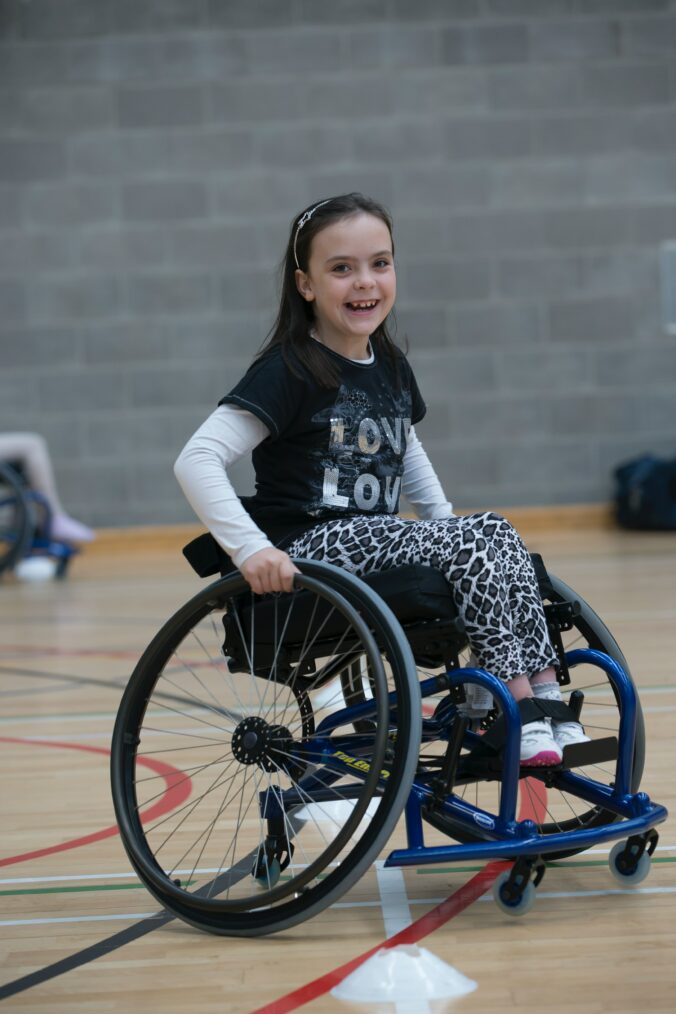
Something that stood out to me from today’s presentation on technology and inclusion by Tracy Humphreys was personal identity and how this relates to individuals with disabilities. We started off our session today with a discussion about our personal identities. At first, I really struggled to come up with ideas for this topic. However, with the help of my peers I started to discover that this was a VERY broad topic, and there are so many emotional and physical traits that make me the person I am today. I connected this idea of personal identity to persons with disabilities. My mom has always emphasized to me that I should not let a disability label a person. For example, rather than saying “an autistic child” you would say “a child with autism.” This concept of personal identity and disabilities peaked my interest and inspired me to explore externally and internally explore further.
After exploring my personal identities, I have chosen to split it into 3 categories: values, interests/talents, personality.
Values:
- Relationships
- Honesty
- Respect
Hobbies:
- Being active
- Music
Personality (physical and emotional):
- Female
- Outgoing
- Hard-working
- Anxiety
Personally, I am of mixed minds on whether or not to add anxiety to that list. On one hand, I do feel like it impacts my everyday life, and that I carry with me as a person. I also feel that weaknesses ARE something that define you, and are important to recognize when exploring a personal identity. On the other hand, I really do not like the idea of labeling myself based on this. National Network discusses some of the standards for referring to persons with disabilities. They explain that it is important to emphasize the abilities and strengths of a student rather than their limitations and weaknesses. They also mention that avoiding phrasing like “normal” is important.
Ultimately, as a future teacher, I think it is important to recognize that many students have varying disabilities, but they also have lots of strengths. Not labeling students based on their disability allows you to be respectful of their situation, and obtain a professional position. Disabilities can be a sensitive topic for the students and their parents so it is crucial to talk about this in a neutral manner.
I a very curious to hear your perspective on this question. Do you think disabilities are part of one’s personal identity? Should it be used to label a student?
Hi Teagan! Thank you for sharing such a well thought out recap of the class on Monday and sharing a bit about yourself. I am so sad to have missed this one but your post really helps fill in the gaps. To answer your question I honestly think yes, disabilities can be a part of a person’s identity. An identity is made up of so many components of a person, it’s complex and usually pretty messy. What one may see as a weakness may actually be viewed as a strength from another perspective. You mentioned that anxiety is a weakness but could how you manage it and work through it not been seen as a strength?
However, when it comes to labeling I think that’s something completely different. Labeling and categorizing is something that everyone does but I feel it should be used more inwardly. Like by a person’s personality, not they’re physical space unless the individual labels themselves that way. It’s all about how the student feels about themselves and if they aren’t comfortable with being labeled by their disability then they shouldn’t be.