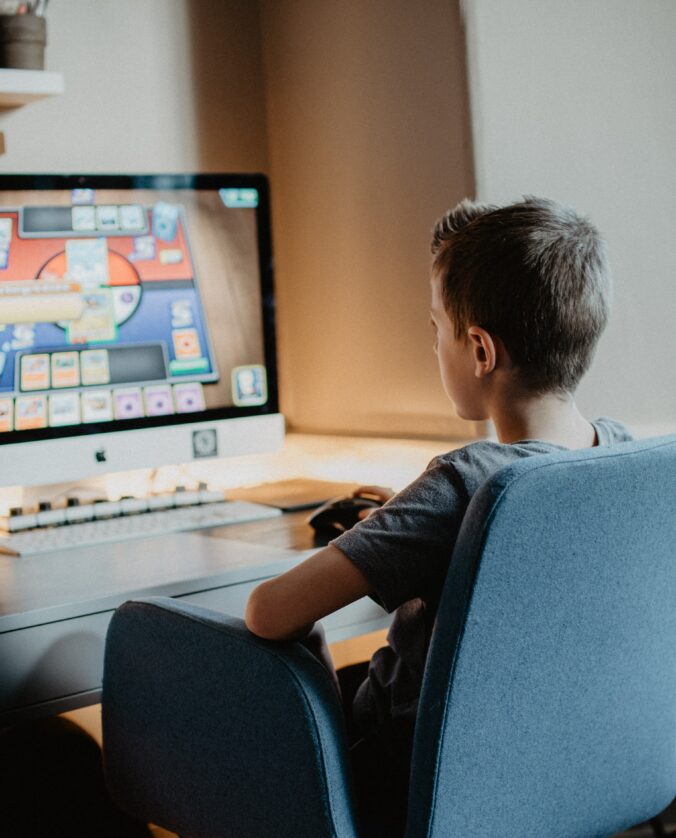
Today, we had a guest presenter come and talk to us about Gamification and Game-based learning. This is something that I look back on from my elementary, middle, and high school years, as a positive experience. I remember having extremely fond memories from going to the computer lab in elementary school. I remember engaging with in a wide-variety of typing games (All the Right Type, Dance Mat Typing, Tux Typing), Incredibox, Club Penguin, Early Learning House Game (Millie’s Math House, etc), Poptropica, Math Playground, Prodigy, and many others that I cannot remember the name of! I welcome any memories of computer games from elementary school in the comments. Looking to dwell in the nostalgia:) For me, I think that typing is such a crucial skill for students to learn at an early age. This was something that I learned in Elementary school and has been super helpful to me in school. It has been awhile since I have been in an elementary school classroom, so I am unsure if typing is still emphasized as highly as it was when I was in school. I hope it is!
I think Tina’s presentation was really interesting. Although her scenario is specific to high school education, I still think there are many things I can take away from it. Specifically, her organization and personalized learning on Google Classroom. Throughout my middle and high school years, I had a lot of experiences with Google Classroom, and can say that this may have been the best I have ever seen. I am also grateful for all the technological resources that Tina introduced us to. Almost all of these resources were new to me, and something I hopefully have the opportunity to explore in the future.
When browsing games on Hour of Code with Amanda, we chose to play AI for Oceans. We chose this game because it looked both simple and fun. We are both hoping to have the opportunity to work with younger students in our practicums, so this game seemed appropriate. This game was not really your typical coding game; rather, it focused on much simpler objectives. Your goal was the program the AI machine so that it cleans the ocean properly. You would then go through and click which things belong/ don’t belong in the ocean. This would basically “code” the machine. https://hourofcode.com/ai-oceans
How do we embed authentically and with care?
This is a topic that we have focused quite a bit on this term. Specifically, our most recent assignment in EDCI 306 is about embedding EDI principles into our classroom practices (due on Friday btw). The five R’s however, were something new to me. In connection to The First People’s Principles of Learning, the 5 R’s, respect, relevance, reciprocality, responsibility, and relationships are greatly emphasized. These 5 words appear to foster a foundation for Indigenous knowledge, culture, and education. As future educators, these words are crucial to reinforce throughout all areas of study. Most importantly, it is crucial to acknowledge the importance of these 5 words when teaching Indigenous Education. Ultimately, the reading provided me with some information and interesting considerations.
Featured Image by Kelly Sikkema on Unsplash
Leave a Reply
You must be logged in to post a comment.